
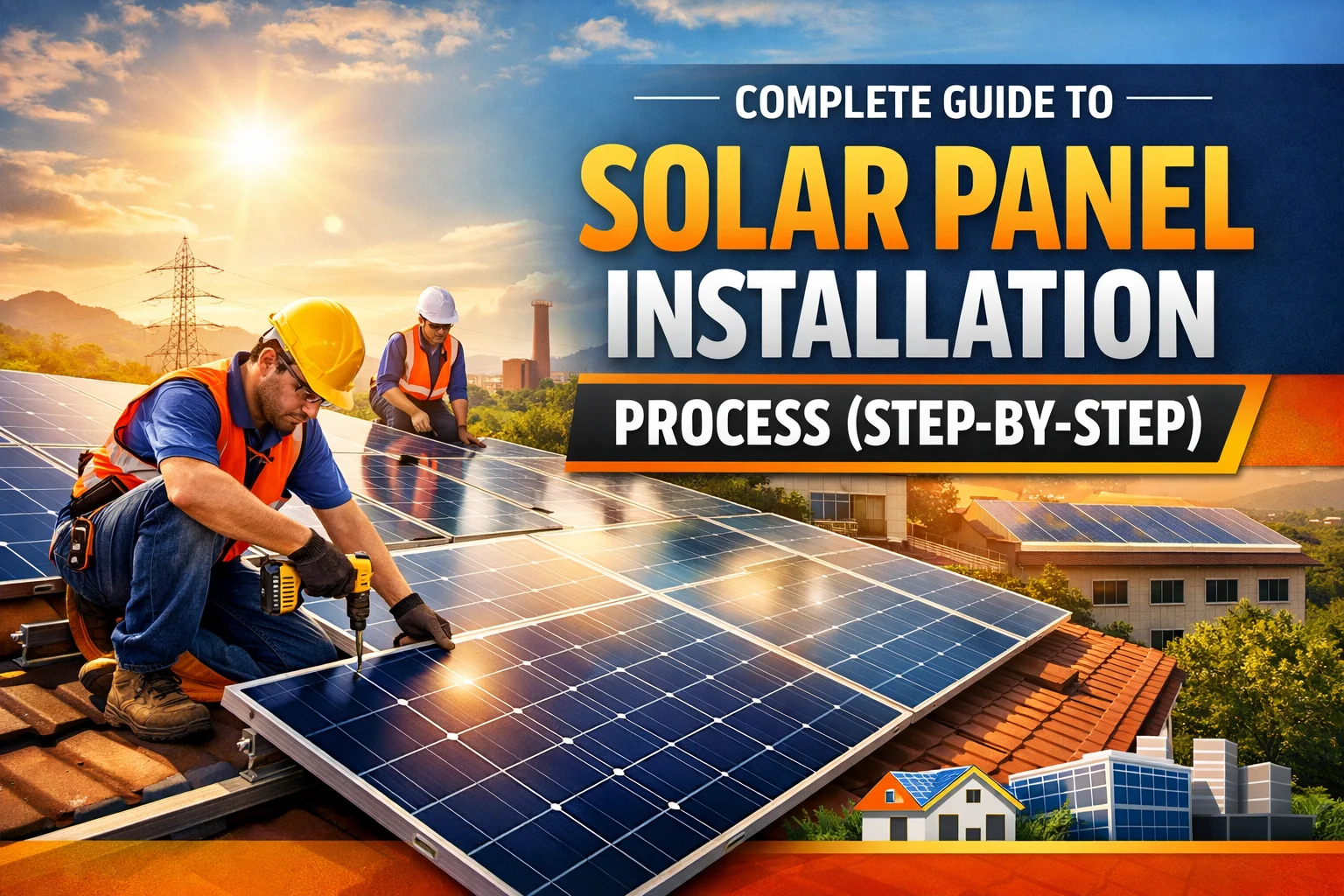
With rising electricity costs and increasing awareness about clean energy, more homeowners and business owners in India are turning to solar power. Understanding the solar panel installation process is essential before making this valuable investment. Whether you own a house, office, or factory, knowing how installation works helps you make informed decisions and ensures maximum return on investment.
At Solar X, we specialize in residential, commercial, and industrial solar solutions across India. In this comprehensive guide, we will explain the solar panel installation process step-by-step, from site inspection to final commissioning. By the end of this article, you’ll have a clear understanding of how solar systems are installed and what to expect during each stage.
What is the Solar Panel Installation Process?
The solar panel installation process is a structured procedure that involves planning, designing, installing, and activating a solar power system. It typically includes:
- Site assessment
- System design
- Approvals & documentation
- Installation
- Inspection & commissioning
- Net metering activation
Let’s break down each step in detail.
Step-by-Step Solar Panel Installation Process in India
Step 1: Site Survey & Feasibility Analysis
The first and most important step in the solar panel installation process is site inspection.
During this stage, Solar X experts:
- Inspect roof condition and strength
- Measure available shadow-free area
- Analyze direction and tilt angle
- Check electricity consumption patterns
- Evaluate nearby shading (trees, buildings)
Why This Step Matters:
A proper site survey ensures:
- Maximum power generation
- Correct system sizing
- Safe installation
- Better ROI
For factories and commercial buildings, structural load analysis is especially critical.
Step 2: System Design & Engineering
Once the survey is complete, the technical team designs a customized solar solution.
This includes:
- Selecting solar panel type (Mono PERC, Bifacial, etc.)
- Choosing inverter capacity
- Designing mounting structure
- Preparing wiring layout
- Calculating generation estimates
The design stage of the solar panel installation process ensures optimal performance for 25+ years.
Step 3: Government Approvals & Documentation
In India, installing a solar system requires approvals from the local DISCOM (electricity distribution company).
Required Documentation:
- Net metering application
- System design documents
- Identity and property documents
- Electrical load details
Solar X handles the entire paperwork process for:
- Residential solar installation
- Commercial rooftop solar
- Industrial solar projects
This step ensures compliance with Indian renewable energy regulations.
Step 4: Mounting Structure Installation
After approvals, the physical installation begins.
What Happens Here:
- Installation of aluminum or galvanized iron structures
- Proper alignment for optimal sunlight
- Waterproof sealing of roof points
For industrial buildings, elevated or ground-mounted structures may be used.
A strong mounting system ensures durability against wind and weather.
Step 5: Solar Panel Installation
Now comes the main stage of the solar panel installation process — placing the panels.
Key Activities:
- Mounting panels securely on structure
- Connecting panels in series/parallel
- Ensuring correct tilt and orientation
High-quality panels can last 25–30 years, making this a long-term investment.
Step 6: Inverter & Electrical Wiring Installation
The inverter is the heart of your solar power system.
During this stage:
- DC wiring from panels to inverter
- AC connection to main distribution board
- Installation of DCDB & ACDB
- Earthing and lightning protection
This step ensures safe electricity conversion and distribution.
Step 7: Testing & Commissioning
Once installation is complete:
- System performance testing is done
- Voltage and safety checks are conducted
- Final inspection by DISCOM
- Net meter installation
After approval, your solar system starts generating power.
This final step completes the solar panel installation process.
Timeline of Solar Panel Installation in India
| Project Type | Average Time Required |
|---|---|
| Residential (1–10 kW) | 2–5 Days |
| Commercial (10–100 kW) | 1–3 Weeks |
| Industrial (100 kW+) | 3–8 Weeks |
Time may vary based on approvals and system size.
Benefits of Proper Solar Panel Installation
A professionally executed solar panel installation process ensures:
- 70–90% reduction in electricity bills
- Protection from rising tariff rates
- 25+ years of energy savings
- Increased property value
- Reduced carbon footprint
For factory owners, solar reduces operational costs significantly.
Why Choose Solar X?
Choosing the right solar company is as important as understanding the installation process.
Solar X Offers:
✅ Customized solar solutions
✅ End-to-end installation services
✅ Government approval handling
✅ High-efficiency Tier-1 solar panels
✅ 25-year performance warranty
✅ Experienced technical team
✅ PAN-India service support
Whether it’s a residential rooftop or a megawatt-scale industrial project, Solar X ensures a smooth and professional solar panel installation process.
Cost of Solar Panel Installation in India
The cost depends on:
- System capacity (kW)
- Type of panels
- Roof type
- Location
- Subsidy eligibility
Average Cost Range:
- Residential: ₹45,000 – ₹60,000 per kW
- Commercial: ₹40,000 – ₹55,000 per kW
- Industrial: Project-based pricing
Government subsidies may apply for residential systems under MNRE guidelines.
Frequently Asked Questions (FAQs)
1. How long does the solar panel installation process take?
Residential systems typically take 2–5 days after approval. Commercial and industrial systems may take longer depending on size.
2. Do I need government approval before installing solar?
Yes, net metering approval from your local DISCOM is required.
3. How much space is required for 1 kW solar system?
Approximately 80–100 sq. ft. shadow-free rooftop area is needed.
4. What is the lifespan of a solar power system?
Solar panels last 25–30 years, while inverters typically last 8–12 years.
5. Is solar suitable for factories?
Absolutely. Industrial solar installation helps reduce operational costs significantly and offers high ROI.
Is Solar Installation Worth It in India?
Yes. With increasing electricity tariffs and government support, solar energy is one of the smartest investments for homeowners and businesses in India.
The structured solar panel installation process ensures your system performs efficiently for decades.
Ready to Go Solar with Solar X?
If you’re planning to install solar panels for your home, office, or factory, now is the perfect time.
Solar X provides complete end-to-end solutions — from site survey to commissioning — ensuring a seamless and professional experience.
👉 Contact Solar X today for a FREE site inspection and customized solar quote.
Switch to clean energy. Reduce electricity bills. Power your future with Solar X.
0 Comments